
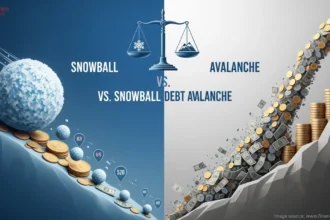



| QUICK ANSWER: The debt avalanche beats the snowball when your card APRs sit far apart, your highest-rate balance is large, and payoff will take two years or more. In a $22,000 five-card test at 2026 rates, the avalanche saved $1,301 and finished two months sooner. The snowball wins when rates are close or motivation is fragile. |
| KEY TAKEAWAYS: The avalanche pays the highest APR first. The snowball pays the smallest balance first. Both pay minimums on everything else.In our $22,000 test, the avalanche cost $7,824 in interest versus $9,125 for the snowball, a $1,301 gap over 30 to 32 months.That gap shrank to $73 when we squeezed the five rates into a 2.5-point range.Paying $1,000 a month instead of fixed minimums cut interest by $9,531 under the avalanche, more than seven times the gap between the two methods.If you have quit a payoff plan before, the snowball’s extra cost works out to about $41 a month, which may be cheap insurance.What changed in 2026: the Federal Reserve’s average rate on card accounts that pay interest rose to 22.15% in the second quarter from 21.52% in the first, which raises the price of choosing the wrong payoff order. |
What Is the Difference Between the Debt Avalanche and the Debt Snowball?
The debt avalanche and the debt snowball are two ways to decide which credit card gets your extra payment. With the avalanche, you pay the card with the highest annual percentage rate (APR, the yearly cost of borrowing) first. With the snowball, you pay the smallest balance first, whatever the rate. In both, you keep paying the minimum everywhere else and roll each freed-up payment into the next target, as Experian’s explainer describes.
The choice matters more now because borrowing is expensive. The Federal Reserve put the average rate on card accounts that pay interest at 22.15% in the second quarter of 2026, and the New York Fed reports card balances of $1.263 trillion. Experian puts the average balance at $6,659 as of March 2026.
Most advice stops at “math says avalanche, psychology says snowball.” That is true but too vague to act on. Below are nine concrete signs, six pointing to the avalanche and three pointing away from it, each tested on the same $22,000 example.
Which Payoff Method Does Each Sign Point To?
| # | Sign | Points to | What our $22,000 test showed |
|---|---|---|---|
| 1 | Rates 8 or more points apart | Avalanche | $1,301 gap at a 13.65-point spread |
| 2 | Highest rate sits on a big balance | Avalanche | A $5,600 store card costs $148 a month in interest |
| 3 | Payoff takes two years or more | Avalanche | Gap of $447 to $1,399 across $800 to $2,500 budgets |
| 4 | A penalty or store-card rate in the mix | Avalanche | A 29.99% penalty rate added $365 to the gap |
| 5 | You can wait a year for the first win | Avalanche | First card cleared in month 14, not month 6 |
| 6 | Cards sit beside lower-rate loans | Avalanche | $661 gap on a mixed $22,000 example |
| 7 | You have quit a payoff plan before | Snowball | Extra cost is about $41 a month |
| 8 | Rates within about 3 points | Snowball | Gap fell to $73 |
| 9 | Many due dates and a missed payment before | Snowball | Three accounts open at month 18, not four |
Source: FinanceDevil payoff model, run October 10, 2026. Illustrative borrower, not a quote.
How Did We Test the Debt Avalanche vs Snowball?
| METHODOLOGYSelection: each sign can be checked against your own statements and tested in a payoff model.Profile: one borrower with five credit cards totaling $22,000, a $1,000 monthly debt budget, fixed minimums totaling $680, and no new charges.Math: interest accrues monthly at APR divided by 12, and freed-up minimums roll into the next target. All figures were computed in code on October 10, 2026.Data: rates are anchored to the Federal Reserve G.19 release (Aug. 7, 2026), Bankrate’s 2025 Retail Cards Study and Experian (March 2026). The cards are illustrative, not offers.Limits: real minimums often shrink as balances fall, so real payoff is slower than modeled. |
| Card | Balance | APR | Minimum | Snowball order | Avalanche order |
|---|---|---|---|---|---|
| Retail card | $1,900 | 24.99% | $65 | 1 | 3 |
| Credit union card | $3,300 | 17.99% | $85 | 2 | 5 |
| Rewards card | $5,200 | 22.99% | $145 | 3 | 4 |
| Store-only card | $5,600 | 31.64% | $190 | 4 | 1 |
| Penalty-rate card | $6,000 | 29.99% | $195 | 5 | 2 |
| Total | $22,000 | 26.52% avg. | $680 |
Rates as of October 2026. The store-only rate matches the 2025 Bankrate store-only average of 31.64%; the 29.99% card reflects a typical penalty rate.
What Did the Test Show Before We Get to the Signs?
The snowball borrower is debt-free in 32 months and pays $9,125.13 in interest. The avalanche borrower finishes in 30 months and pays $7,824.08. The $1,301.05 difference is about 14% of the snowball’s interest bill. A hybrid that clears the $1,900 card first and then follows rate order lands in between.
| Result at $1,000 a month | Snowball | Avalanche | Hybrid (small card first) |
|---|---|---|---|
| Months to debt-free | 32 | 30 | 31 |
| Total interest | $9,125.13 | $7,824.08 | $8,054.73 |
| Total paid | $31,125.13 | $29,824.08 | $30,054.73 |
| Extra cost vs avalanche | $1,301.05 | $0 | $230.65 |
| First card cleared | Month 6 | Month 14 | Month 6 |
| Accounts still open at month 12 | 4 | 5 | 4 |
| Accounts still open at month 18 | 3 | 4 | 3 |
Source: FinanceDevil payoff model, October 10, 2026. Interest compounds monthly; no new charges.
| FINANCEDEVIL INSIGHT: THE METHOD MATTERS LESS THAN THE SPREAD AND THE PAYMENTWhen we squeezed the five APRs into 22.49% to 24.99%, the avalanche’s edge fell from $1,301 to $73.Fixed minimums of $680 would take 62 months and $17,354.58 in interest. Moving to $1,000 a month cut interest by $9,530.50 under the avalanche, 7.3 times the gap between methods.The snowball’s premium is $1,301.05 over 32 months, or about $41 a month. |
Which 6 Signs Say the Debt Avalanche Wins for You?
Sign 1: Are your interest rates 8 or more points apart?
A wide rate gap is the clearest reason to choose the avalanche.
Our five cards run from 17.99% to 31.64%, a 13.65-point spread, and the avalanche saves $1,301.05. Real stacks can look like this: the Federal Reserve measured 22.15% on interest-bearing accounts in Q2 2026, while Bankrate’s 2025 study found store-only cards averaging 31.64%. Scenario: in Columbus, Ohio, where Experian’s average card balance is $6,209, a household with a 17.99% credit union card and a 31.64% store card pays about 1.8 times as much interest per dollar on the store card.
Fits you if: your highest and lowest APRs are 8 or more points apart.
Skip if: every card charges within a few points of the others (Sign 8).
Sign 2: Does your highest rate sit on a large balance?
A big balance at a high rate is where interest piles up fastest.
In month one, the $5,600 store card at 31.64% generates $147.65 in interest, 3.7 times the $39.57 on the $1,900 retail card. Balances this size are common: Experian reports a Houston-area average of $7,657 in March 2026, which at 31.64% would cost about $202 a month.
Fits you if: your most expensive card is also one of your largest.
Skip if: your highest-rate card is also your smallest, because both methods already start there.
Sign 3: Will payoff take two years or longer?
The longer interest has to run, the more a rate-ordered plan saves.
At $1,000 a month, the avalanche finishes in 30 months and the snowball in 32. At $800 a month, payoff runs 43 to 44 months, more than three and a half years of compounding, and the gap is $1,350.22. At $2,100 a month the gap is $554.50, and at $2,500 it is $446.92. Across budgets from $800 to $2,500, the avalanche kept an edge of $447 to $1,399.
Fits you if: you will need more than two years to clear everything.
Skip if: you can clear it in about a year and a $450 to $550 saving does not matter to you.
Sign 4: Is a penalty or store-card rate in your stack?
One card near 30% can reorder your whole plan.
A penalty APR is a higher rate an issuer can apply once you pay 60 days late, with 45 days’ notice, and it can last six months or more, according to NerdWallet. In our test the 29.99% card costs $149.95 a month in interest, versus $109.95 at 21.99%. Repricing it cuts the avalanche’s edge from $1,301.05 to $936.50, so the penalty rate alone adds $364.55 to the gap.
Fits you if: any card charges 28% or more.
Skip if: your issuer removes the penalty rate; then re-rank your list.
Sign 5: Can you stay on plan for a year without a payoff?
The avalanche asks for patience, and the first win can take more than a year.
Our avalanche borrower clears no card until month 14, while the snowball clears one in month 6. Waiting is hard: a 2011 Journal of Marketing Research study found consumers tended to close small accounts first even when rates favored other debts, a pattern the authors called debt account aversion.
Fits you if: you have kept a budget or autopay running for a year or more.
Skip if: you have abandoned a plan before (Sign 7).
Sign 6: Do you owe cards and lower-rate loans together?
When cards sit beside cheaper loans, rate order keeps extra dollars off the wrong debt.
The Federal Reserve’s Q2 2026 averages show the spread: 22.15% on cards, 11.86% on 24-month personal loans and 7.14% on 60-month new-car loans. On $5,000, that is $92.29, $49.42 and $29.75 of interest a month. In a mixed $22,000 example with a $1,200 budget, the snowball clears a 7.14% auto loan in month 5 while a 31.64% store card waits until month 10. The avalanche saves $661.33.
Fits you if: you owe cards plus personal or auto loans.
Skip if: a loan has a prepayment penalty, or it is a federal student loan with its own repayment and forgiveness rules.
Which 3 Signs Say the Debt Avalanche Will Not Beat the Snowball for You?
Sign 7: Have you started and abandoned a payoff plan before?
If motivation is your weak spot, the snowball’s extra cost is cheap insurance.
The snowball cost $1,301.05 more than the avalanche over 32 months, about $41 a month. Falling back to fixed minimums would cost $17,354.58 and take 62 months. A plan you finish beats a perfect plan you drop at month 14.
Fits you if: you have started and stopped a payoff plan.
Skip if: you have never missed a month.
| EXPERT INSIGHTResearcher Remi Trudel, writing in the Harvard Business Review in December 2016, advised borrowers to “concentrate repayments first on the cards or accounts with the smallest debts.” His advice, reported by CBS News MoneyWatch, applies when the accounts carry similar interest rates. That condition is exactly Sign 8. |
Sign 8: Are all your rates within about 3 points of each other?
When rates cluster, the avalanche’s edge nearly vanishes.
We repriced the same five cards to between 22.49% and 24.99%, a 2.5-point range. Both methods finished in 30 months, and the gap fell from $1,301.05 to $73.16. Rates near that band are common, since the Federal Reserve’s average across all card accounts was 20.94% in Q2 2026.
Fits you if: your APRs sit within about 3 points.
Skip if: any card runs 8 or more points above the rest (Sign 1).
Sign 9: Are you juggling many due dates, and have you missed one before?
Fewer accounts mean fewer chances to slip, and the snowball closes accounts sooner.
In our test the snowball leaves four accounts open at month 12 and three at month 18, versus five and four for the avalanche. Slips are costly: the New York Fed reports 6.97% of card balances moved into serious delinquency (90 or more days past due) in Q2 2026, and a 60-day miss can trigger a penalty APR (Sign 4).
Fits you if: you track five or more due dates and have paid late before.
Skip if: autopay covers every minimum and has never failed.
| STATE-LEVEL CALLOUT: YOUR BALANCE DEPENDS ON WHERE YOU LIVEExperian’s March 2026 data shows average card balances of $7,760 in Alaska and $7,494 in Connecticut, versus $5,187 in Iowa and $5,264 in Wisconsin. At 22.15%, a $2,573 balance gap costs about $570 a year in interest. The avalanche-versus-snowball math is the same in every state; what changes is how large your balances and rates run. |
What If Neither Method Fits Your Situation?
A hybrid clears one very small balance first, then follows rate order. In our test it finished in 31 months, cost $230.65 more than the pure avalanche and $1,070.40 less than the snowball, and delivered a win in month 6.
If minimums already strain your budget, a nonprofit credit counselor can review your options; the NFCC says a debt management plan is a program, not a loan. Our guide to the 10 best debt relief options compares the alternatives, and how to build an emergency fund while paying off debt covers the safety buffer. If your payments are already slipping, read 6 warning signs your debt situation needs immediate action. Rolling card debt into a home equity line swaps unsecured debt for debt secured by your house, so review 7 things to know before you open a HELOC first.
The Bottom Line
Choose the avalanche when your rates are far apart, your costliest card is large, and you can wait a year for the first win. Choose the snowball when rates are close, you have quit before, or too many due dates are the real risk. Either way, the payment you can sustain beats the method: $1,000 a month saved far more than the order of the cards.
Frequently Asked Questions
Is the debt avalanche or the debt snowball better in 2026?
The avalanche costs less in interest, and the snowball is easier to stick with. In a $22,000 five-card test at 2026 rates, the avalanche saved $1,301 and finished two months sooner. The better choice depends on how far apart your rates are and whether you have quit a payoff plan before.
How much more interest does the snowball cost?
It depends mostly on your rate spread. With five cards between 17.99% and 31.64%, the snowball cost $1,301.05 more over 32 months. When the same cards were repriced between 22.49% and 24.99%, the gap fell to $73.16. Larger balances at the highest rates widen the gap.
Can the snowball ever cost less than the avalanche?
In a standard model with fixed minimums and a fixed monthly budget, the avalanche should never cost more in interest. The snowball ties it when your smallest balance also carries your highest rate, or when rates are nearly equal. Real results can differ if minimum payments change as balances fall.
What is a hybrid of the avalanche and the snowball?
A hybrid clears one very small balance first for a quick win, then switches to highest-rate-first. In our test, clearing the $1,900 card first and then following the avalanche finished in 31 months, cost $230.65 more than the pure avalanche, and cost $1,070.40 less than the snowball.
What if my highest-rate card also has my smallest balance?
Then both methods start with the same card, and the choice only matters for the cards after it. Pay that card first, roll its minimum into the next target, and re-rank your list. Store cards often fit this pattern, since Bankrate found store-only cards averaging 31.64% in 2025.
Should car loans and student loans go into my payoff order?
Include them if you can pay extra without penalty. Federal Reserve averages for the second quarter of 2026 were 22.15% for cards, 11.86% for 24-month personal loans, and 7.14% for 60-month new-car loans, so cards usually come first. Federal student loans have separate repayment and forgiveness rules, so review those before accelerating.
How long does it take to pay off $22,000 in credit card debt?
In our test, $1,000 a month cleared $22,000 in 30 months with the avalanche and 32 with the snowball. At $800 a month it took 43 to 44 months. Paying only fixed minimums of $680 stretched payoff to 62 months and $17,354.58 in interest. Your timeline depends on your rates and budget.
Does the payoff order change my credit score?
Order matters less than total utilization, which is your balances divided by your credit limits. Experian puts average utilization at 28.3% in March 2026 and says staying under 30% helps avoid damage. Paying balances down generally helps, while closing a paid-off card shrinks your limits and can raise your ratio.
What if I cannot afford more than the minimum payments?
Talk to a nonprofit credit counselor before choosing a method. The National Foundation for Credit Counseling (NFCC) describes its network as certified nonprofit agencies and says a debt management plan is a program, not a loan. Services are offered at low to no cost, though fees vary by agency and state law.
Does a penalty APR change which card I should pay first?
It can. A penalty APR can push a card to the top of an avalanche list, and in our test it added $364.55 to the avalanche’s edge. NerdWallet notes issuers can apply it once a payment is 60 days late and may keep it for six months or more. Ask your issuer about removing it.
Disclaimer
This article is for educational purposes only and is not financial, legal, or credit counseling advice. The $22,000 example is illustrative, uses assumed terms, and is not a quote or an offer. Rates and statistics reflect data available in October 2026 and may change.
Sources
- Federal Reserve Bank of New York, “Household Debt Balances Decreased Slightly; Credit Card Delinquency Transition Rates Remained Steady” (Aug. 11, 2026)
- Federal Reserve Bank of New York, Quarterly Report on Household Debt and Credit, Q2 2026
- Board of Governors of the Federal Reserve System, G.19 Consumer Credit, June 2026 (released Aug. 7, 2026)
- Federal Reserve Bank of St. Louis (FRED), Commercial Bank Interest Rate on Credit Card Plans, Accounts Assessed Interest
- Experian, “Average Credit Card Debt” report, March 2026 data
- Bankrate, “Average Retail Credit Card APR Remains Above 30%, Near a Record High” (2025 Retail Cards Study)
- Bankrate, Retail Credit Card Survey, survey date July 21, 2025
- NerdWallet, “Credit Card Penalty APR: What It Is and How You Can Avoid It”
- Experian, “Avalanche vs. Snowball: Which Repayment Strategy Is Best?”
- Amar, Ariely, Ayal, Cryder and Rick, “Winning the Battle but Losing the War: The Psychology of Debt Management,” Journal of Marketing Research (2011)
- Remi Trudel, “Research: The Best Strategy for Paying Off Credit Card Debt,” Harvard Business Review (Dec. 2016)
- CBS News MoneyWatch, “What research says about erasing credit card debt” (Jan. 2, 2017)
- National Foundation for Credit Counseling, Debt Support