




Introduction
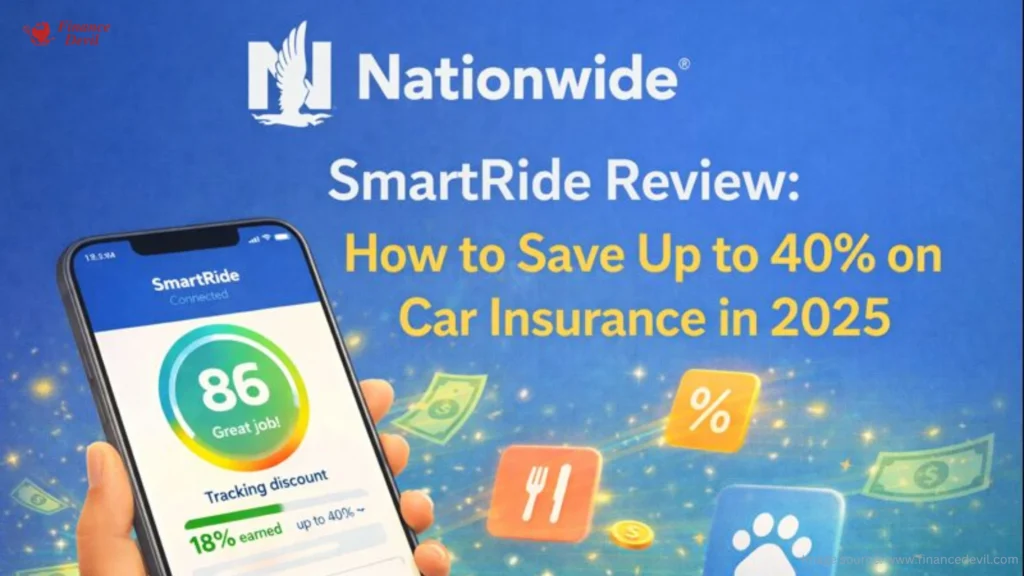
American drivers are facing a harsh reality: car insurance premiums have surged by an average of 26% since 2023, with the typical driver now paying over $2,150 annually. But what if safe driving habits could cut your premium by up to 40%?
Nationwide’s SmartRide program promises exactly that—and according to J.D. Power, it’s the #1 rated usage-based insurance program in America for 2024 and 2025. But before you sign up, you need the complete picture. This comprehensive Nationwide SmartRide review reveals everything: how it actually works, real savings data, customer experiences, privacy concerns, and whether it’s the right fit for your driving lifestyle.
The Problem: Why Car Insurance Costs Keep Rising
The average American driver now faces insurance costs that have outpaced inflation dramatically. According to 2025 data, several factors are driving these increases:
- Increased accident rates in congested urban areas
- Rising vehicle repair costs due to advanced technology in modern cars
- Higher medical costs from accident-related injuries
- More distracted driving incidents, with texting while driving causing crashes every 24 seconds
Traditional insurance models charge everyone in your ZIP code similar rates based on statistical risk—regardless of how safely you actually drive. This one-size-fits-all approach means cautious drivers subsidize reckless ones.
Usage-based insurance (UBI) programs like Nationwide SmartRide flip this model. Instead of assuming your risk based on demographics and location, these programs measure your actual driving behavior—rewarding safe habits with substantial discounts.
What Is Nationwide SmartRide? Understanding the Program
Nationwide SmartRide is a voluntary telematics program available to Nationwide auto insurance policyholders that monitors driving habits for 4-6 months to calculate personalized premium discounts. Unlike traditional insurance discounts that require documentation or life changes, SmartRide rewards you for simply driving safely.
Key Program Features:
Immediate 10-15% Enrollment Discount You receive an instant discount just for signing up—no waiting period required. Sources vary slightly, with some customers reporting 10% and others 15%, likely depending on state regulations.
Maximum Savings of Up to 40% Based on your driving performance during the monitoring period, you can earn additional discounts that bring your total savings to 40% off your Nationwide premium.
Discount-Only Program (No Rate Increases) This is crucial: Unlike some competitors like GEICO DriveEasy or Progressive Snapshot (where 20% of users see rate increases), SmartRide will never raise your rates based on driving data. At worst, you keep your enrollment discount; at best, you earn substantial additional savings.
Permanent Discount Once calculated after your 4-6 month monitoring period, your SmartRide discount remains active for as long as you maintain your Nationwide policy—no need for continued tracking if you use the plug-in device.
How Nationwide SmartRide Works: Three Tracking Options
Nationwide offers flexibility in how you participate, giving you three distinct methods:
Option 1: Mobile App (Most Popular)
Download the SmartRide app from the Apple App Store (4.6 stars, 1,500+ reviews) or Google Play (4.5 stars, 1,500+ reviews). The app runs in the background on your smartphone, automatically detecting trips using GPS and motion sensors.
Pros:
- No device installation required
- Real-time feedback and weekly reports
- View estimated discount as you drive
- Track progress toward maximum savings
Cons:
- May drain phone battery
- Sometimes fails to distinguish driver from passenger
- Requires location services enabled at all times
Option 2: Plug-In Device
Nationwide mails you a small OBD-II device that plugs into your vehicle’s onboard diagnostics port (usually under the dashboard near the steering wheel). Installation takes about 30 seconds.
Pros:
- More accurate than app tracking
- No battery drain on your phone
- No passenger confusion issues
- Return device after monitoring period (discount remains permanent)
Cons:
- Must wait for device to arrive by mail
- Physical installation required
- Can’t switch between vehicles easily
Option 3: Connected Vehicle Integration
If you drive a newer “connected car” (typically 2020 or newer models with built-in telematics), your vehicle may already transmit data directly to Nationwide through manufacturer agreements.
Pros:
- Zero effort required
- Most accurate data collection
- No apps or devices needed
Cons:
- Limited to compatible vehicles
- Must enable data sharing in vehicle privacy settings
- Less transparency about what data is shared
What Does Nationwide SmartRide Monitor? The Four Key Factors
Understanding what SmartRide tracks helps you maximize your discount. The program measures four specific driving behaviors:
1. Miles Driven Per Trip
Why it matters: Statistical analysis shows drivers who log more miles face higher accident risk simply due to increased road exposure.
Impact on discount: Shorter trips and lower overall mileage boost your savings potential. However, if you’re a high-mileage driver, consider Nationwide’s SmartMiles pay-per-mile program instead.
2. Hard Braking and Rapid Acceleration
Why it matters: Sudden stops and aggressive acceleration indicate driving patterns associated with higher collision rates.
The threshold: Acceleration or braking exceeding 7.7 mph per second triggers a flag. For context, that’s going from 0-60 mph in under 8 seconds or slamming the brakes to avoid a collision.
Real-world consideration: Some customers report penalties for necessary defensive driving, like hard braking to avoid an accident or quick acceleration when merging onto highways. These valid safety maneuvers can still reduce your discount.
3. Nighttime Driving (Midnight to 5 AM)
Why it matters: National Highway Traffic Safety Administration data shows nighttime driving correlates with increased accident risk due to:
- Reduced visibility
- Higher likelihood of encountering impaired drivers
- Driver fatigue
- Fewer other vehicles on the road (leading to higher speeds)
Impact on discount: Frequent late-night driving will limit your maximum savings. This particularly affects night-shift workers, healthcare professionals, and service industry employees.
4. Idle Time in Traffic
Why it matters: Extended idle time indicates driving in congested areas where accident frequency is statistically higher. SmartRide interprets prolonged idling as a risk factor.
Important note: The program doesn’t penalize brief idling, like warming up your car in cold weather or waiting at drive-throughs. It specifically targets patterns of sitting in heavy traffic.
Urban driver warning: If you commute in major metro areas like Los Angeles, New York City, Chicago, or Houston, high idle times could significantly limit your discount potential.
What SmartRide Doesn’t Track (Notably)
Unlike competitors, SmartRide does NOT monitor:
- Phone usage or screen touches (unlike Allstate Drivewise, State Farm Drive Safe & Save, and USAA SafePilot)
- Your specific speed (only acceleration/deceleration rates)
- Your exact location or routes in real-time
- Cornering or sharp turns (unlike State Farm and USAA)
This makes SmartRide less intrusive than many competing programs while still measuring core safety behaviors.
How Much Can You Really Save With SmartRide? Real Numbers
Let’s break down the actual savings potential with concrete examples:
The Initial Enrollment Discount
10-15% immediate savings (varies by state)
For a driver paying $2,150/year (the 2025 national average):
- 10% discount = $215 annual savings
- 15% discount = $322.50 annual savings
You receive this discount immediately upon enrollment, before any monitoring begins.
The Performance-Based Discount
After 4-6 months of monitoring, Nationwide calculates your additional discount based on driving behavior.
Official maximum: Up to 40% total savings
Reality check: According to customer reviews and experiences analyzed from multiple sources, achieving the full 40% is challenging. The average participant earns approximately 22% total discount (including the enrollment bonus).
Real-World Savings Examples
| Annual Premium | 22% Average Discount | 40% Maximum Discount |
| $1,500 | $330/year savings | $600/year savings |
| $2,150 | $473/year savings | $860/year savings |
| $3,000 | $660/year savings | $1,200/year savings |
Important Limitation
The discount applies to specific coverage types on your policy, not necessarily your total premium. Nationwide doesn’t specify exactly which coverages qualify, but it’s typically comprehensive and collision coverage rather than liability.
State Variations
Discount availability and maximums vary by state due to insurance regulations. Some states cap maximum discounts or limit enrollment. Contact your Nationwide agent for state-specific details.
Nationwide SmartRide vs. Competitors: How It Stacks Up
Here’s how SmartRide compares to other major usage-based insurance programs available to American drivers:
| Program | Maximum Discount | Enrollment Bonus | Can Raise Rates? | Review Period | Tracking Method |
| Nationwide SmartRide | 40% | 10-15% | No | 4-6 months | App or device |
| Progressive Snapshot | Avg. $231/year | $169 avg | Yes (~20% see increases) | 30+ days | App or device |
| State Farm Drive Safe & Save | 30% | 10% | No | 6 months | Bluetooth device |
| Allstate Drivewise | Varies | Not stated | No | 50 trips | App only |
| GEICO DriveEasy | 15% | Not stated | Yes | 6 months | App only |
| USAA SafePilot | 30% | 10% | No | Ongoing | App only |
| Liberty Mutual RightTrack | 30% | 10% | No | 90 days | App (device in NY) |
Key Competitive Advantages
- Highest maximum discount potential at 40%
- No rate increase risk unlike Progressive and GEICO
- Choice of tracking method (app or plug-in device)—most competitors offer app-only
- Doesn’t track phone usage, giving you more freedom while driving
- Permanent discount after monitoring period with plug-in device (no ongoing tracking required)
Where Competitors Excel
- State Farm Drive Safe & Save: Tracks more data points (cornering, specific speed) for potentially more accurate risk assessment
- Progressive Snapshot: Shorter minimum monitoring period (30 days vs. 4 months)
- USAA SafePilot: Available to military families with excellent customer service
- Allstate Drivewise: Offers ongoing rewards and cashback features beyond just discounts
Real Customer Experiences: What Users Actually Say
J.D. Power Recognition
Nationwide SmartRide earned the #1 ranking in J.D. Power’s 2024 and 2025 Auto Insurance Study in the usage-based insurance category, scoring 842 out of 1,000 points—21 points above the national average.
Mobile App Reviews
Apple App Store: 4.6 out of 5 stars (1,500+ reviews)
Google Play: 4.5 out of 5 stars (1,500+ reviews)
Positive Customer Feedback
“I was always skeptical about car insurance companies tracking my every move. But it’s not like that. I was worried being a passenger would count against me but Nationwide has the best app ever—they recognize whether you’re driving or not. I’ve saved 24% on my policy.” – Apple App Store user
Common Praise:
- Easy-to-use interface
- Helpful feedback improves driving awareness
- Significant savings for careful drivers
- Transparent discount tracking
- Good customer support
Critical Customer Feedback
“Honestly, I participated in this same program with another company and never had so many issues with that app as I do with the Nationwide one…” – Apple App Store user
Common Complaints:
- The app sometimes fails to distinguish passengers from drivers (requires manual trip editing)
- Discounts can fluctuate unexpectedly
- Penalizes necessary defensive driving actions (hard braking to avoid accidents, quick acceleration when merging)
- Some Reddit users report “new system” causing premium increases (though this contradicts Nationwide’s stated policy)
- Less accurate than expected in tracking actual driving behavior
- Urban drivers with unavoidable traffic face lower discounts
The Bottom Line from Users
Most customers report positive experiences and meaningful savings, particularly those who:
- Drive primarily during daytime hours
- Avoid heavy traffic commutes
- Maintain smooth, predictable driving patterns
- Drive moderate annual mileage
However, the program frustrates customers who:
- Work night shifts or frequently drive late
- Commute in congested urban areas
- Need to drive aggressively in certain situations for safety
- Experience technical issues with the app
Privacy and Data Security: What You Need to Know
Data privacy concerns are legitimate when allowing an insurance company to track your driving. Here’s what Nationwide collects and how it’s used:
What Data SmartRide Collects
- Miles driven per trip
- Acceleration and braking patterns
- Time of day for each trip
- Duration of idle time
- GPS data (for measuring acceleration/braking, not real-time location tracking)
What SmartRide Doesn’t Collect
- Your specific routes or destination addresses
- Real-time location tracking
- Personal conversations or phone data
- Continuous GPS tracking when not driving
How Nationwide Uses Your Data
According to Nationwide’s terms:
Primary Use: Calculating your SmartRide discount
Secondary Uses:
- Shared within Nationwide’s family of companies
- Used for marketing additional products (homeowners insurance, life insurance, etc.)
- Potentially shared with third-party companies for marketing purposes
Important: You can opt out of data sharing by contacting Nationwide directly. The discount calculation doesn’t require you to consent to marketing uses.
Data Security Measures
Nationwide states it encrypts transmitted data and maintains cybersecurity protocols, though they don’t provide specific technical details publicly. They claim they do not sell your data to third parties for profit.
Comparison to Competitors
Most usage-based insurance programs collect similar data. SmartRide is actually less intrusive than programs that track:
- Phone usage and screen touches (Allstate, State Farm, USAA)
- Specific speed at all times
- Exact routes and locations
- Passenger conversations via smartphone microphone
Privacy Best Practices
If you’re concerned about privacy but want the discount:
- Use the plug-in device instead of the app (less data collection)
- Opt out of marketing data sharing
- Disable the app after the monitoring period (if using mobile option)
- Return the plug-in device after receiving your permanent discount
- Review Nationwide’s privacy policy annually for changes
How to Enroll in Nationwide SmartRide: Step-by-Step Process
Eligibility Requirements
- Must have an active Nationwide auto insurance policy
- Available in most states (contact agent for availability)
- New and existing customers can enroll
- Multiple vehicles can participate (each gets individual discounts)
Enrollment Steps
Step 1: Contact Your Agent or Enroll Online
- Current policyholders can enroll through nationwide.com
- New customers can request enrollment when purchasing a policy
- Call your Nationwide agent directly for assistance
Step 2: Choose Your Tracking Method
Option A – Mobile App:
- Receive a text with download link
- Download from App Store (iOS) or Google Play (Android)
- Create account and link to your policy
- Enable location services and necessary permissions
- App automatically starts tracking trips
Option B – Plug-In Device:
- Nationwide mails device to your address (arrives in 5-7 business days)
- Locate your vehicle’s OBD-II port (usually under dashboard near steering wheel)
- Plug in device firmly (should click into place)
- Device begins transmitting data immediately
Option C – Connected Vehicle:
- Verify your vehicle is compatible (2020+ models typically)
- Enable data sharing in vehicle privacy settings
- Contact Nationwide to confirm setup
Step 3: Start Driving
- Your enrollment discount applies immediately
- Drive normally for 4-6 months during monitoring period
- Check app weekly to see estimated discount progress
Step 4: Receive Your Discount
- Nationwide calculates final discount after monitoring period
- Most drivers receive results within 80-90 days
- The discount applies automatically at your next policy renewal
- Permanent discount lasts as long as you maintain coverage
Step 5: Return Device (If Applicable)
- If you used plug-in device, Nationwide sends prepaid return envelope
- Remove device and mail back
- Your discount remains active permanently
Is Nationwide SmartRide Worth It? The Verdict for Different Driver Types
SmartRide Is EXCELLENT For:
- Safe, Cautious Drivers If you naturally drive smoothly without hard braking or rapid acceleration, you’ll maximize savings.
- Daytime Drivers Those who rarely drive between midnight and 5 AM earn higher discounts.
- Low-to-Moderate Mileage Drivers If you drive under 12,000 miles annually, you’ll benefit significantly.
- Suburban and Rural Drivers Less traffic means lower idle time and fewer forced hard braking incidents.
- Drivers with Flexible Schedules Ability to avoid rush hour traffic boosts your discount potential.
- Risk-Averse Individuals The no-rate-increase guarantee makes this a safe experiment—worst case, you keep your 10-15% enrollment discount.
SmartRide Is QUESTIONABLE For:
- Urban Commuters High traffic volumes lead to elevated idle time, reducing discount potential. Los Angeles, New York, Chicago, and Houston drivers may struggle to earn maximum savings.
- Night Shift Workers Healthcare professionals, security personnel, and service industry workers who regularly drive from midnight to 5 AM will face discount limitations.
- High-Mileage Drivers If you drive 15,000+ miles annually, consider SmartMiles (pay-per-mile) instead.
- Aggressive Drivers Sports car enthusiasts or those who enjoy spirited driving won’t benefit from tracking that penalizes acceleration patterns.
- Privacy-Concerned Individuals If data collection makes you uncomfortable, even with opt-out options, this isn’t the right program.
SmartRide Is NOT RECOMMENDED For:
- Rideshare Drivers (Uber, Lyft) Commercial driving patterns, high mileage, and frequent nighttime trips make SmartRide unsuitable. Most usage-based programs exclude commercial use anyway.
- Delivery Drivers Similar issues to rideshare—constant stops, high mileage, and traffic exposure.
- Drivers with Multiple Daily Commuters If several drivers share one vehicle, tracking becomes complicated and may not reflect individual safe driving.
The Financial Math
Break-even analysis:
If you pay $2,150/year for insurance:
- Enrollment discount (15%): $322.50 savings
- Average total discount (22%): $473 annual savings
- Maximum discount (40%): $860 annual savings
Even achieving just the 22% average saves $473 annually—$39.41 per month for simply allowing monitoring during a 4-6 month period.
For most drivers, this makes SmartRide worth trying, especially given the no-rate-increase protection.
Alternative Consideration: SmartMiles
If you drive under 10,000 miles annually, Nationwide’s SmartMiles pay-per-mile program might save you more money. SmartMiles charges:
- A low monthly base rate
- Per-mile charge for actual miles driven
Some Nationwide customers can even combine SmartRide on one vehicle and SmartMiles on another if they insure multiple cars.
Common Mistakes to Avoid With SmartRide
1. Not Editing Passenger Trips
When you’re a passenger, the app may still record the trip. Always manually edit these trips in the app to avoid unfair penalties.
2. Disabling Location Services
Turning off location services too frequently can result in Nationwide canceling your discount. Keep it enabled throughout the monitoring period.
3. Removing the Plug-In Device
If using the device, keep it plugged in continuously. Removing it for extended periods may disqualify you.
4. Ignoring Weekly Feedback
The app provides weekly reports showing your estimated discount trend. Review these to adjust driving habits and maximize savings.
5. Assuming Maximum Discount Is Guaranteed
The 40% maximum is achievable but uncommon. Set realistic expectations around the 20-25% average.
6. Not Asking About State-Specific Rules
Discount maximums and program terms vary by state. Confirm details with your Nationwide agent before enrolling.
7. Forgetting to Return the Device
If you don’t return the plug-in device after the monitoring period, Nationwide may charge your account.
Expert Tips to Maximize Your SmartRide Discount
Tip 1: Anticipate Stops and Accelerate Gradually
Look ahead at traffic lights and begin slowing down early. When lights turn green, accelerate smoothly rather than rapidly.
Tip 2: Avoid Driving Between Midnight and 5 AM
If possible, schedule late-night activities for earlier hours or use alternative transportation during this high-risk window.
Tip 3: Plan Routes to Avoid Heavy Traffic
Use GPS apps like Waze or Google Maps to identify less congested routes, reducing idle time.
Tip 4: Consider Carpooling or Alternative Commutes
If you’re a passenger, edit trips immediately. Better yet, carpool in someone else’s vehicle on alternate days to reduce tracked trips.
Tip 5: Check Your Progress Weekly
Use the app’s feedback to identify patterns. If you see frequent hard braking flags, focus on following distance.
Tip 6: Use Cruise Control on Highways
Maintaining steady speeds prevents unintentional acceleration fluctuations.
Tip 7: Combine with Other Nationwide Discounts
Stack SmartRide with:
- Multi-policy discount (home + auto)
- Multi-vehicle discount
- Good student discount
- Defensive driving course discount
- Safety feature discounts (anti-theft, airbags, ABS)
Frequently Asked Questions (FAQs)
How long does the Nationwide SmartRide monitoring period last?
The monitoring period lasts 4-6 months, though most customers receive their final discount calculation within 80-90 days. After this period, you can remove the plug-in device or delete the app, and your discount remains permanent for as long as you maintain your Nationwide policy.
Can Nationwide SmartRide increase my insurance rates?
No. Nationwide explicitly states that SmartRide is a discount-only program. Your rates will never increase based on driving data collected through SmartRide. At minimum, you keep your 10-15% enrollment discount. This distinguishes SmartRide from competitors like Progressive Snapshot and GEICO DriveEasy, which can raise rates for risky driving.
Does SmartRide track my exact location and where I drive?
No. While SmartRide uses GPS to measure acceleration and braking, it does not track your real-time location, specific routes, or destinations. Nationwide cannot see where you go or create a map of your travels. The GPS is used only to detect motion patterns related to driving behavior.
What happens if I forget to edit a passenger trip?
Passenger trips may be incorrectly attributed to you as the driver, potentially affecting your discount if the trip involved risky driving behaviors. Always edit trips as soon as possible using the app’s trip history feature. Select the trip and change the label to “passenger.”
Can I use SmartRide if I have multiple drivers on my policy?
Yes. All drivers on your policy benefit from the SmartRide discount. If using the plug-in device, it tracks all driving in that vehicle regardless of who drives. If using the app, install it on each driver’s phone for the most accurate tracking.
Does Nationwide SmartRide work with all vehicles?
Most vehicles manufactured after 1996 have OBD-II ports compatible with the plug-in device. Very old vehicles or certain engine types may not be eligible. The mobile app works with any smartphone. Connected vehicle integration requires 2020+ models with telematics capabilities.
How much does SmartRide cost to participate?
SmartRide is completely free. There are no enrollment fees, device costs, or subscription charges. You receive an immediate discount just for signing up, making it a zero-risk financial decision.
What’s the difference between SmartRide and SmartMiles?
SmartRide: Monitors driving behavior (braking, acceleration, nighttime driving, and idle time) to provide a discount of up to 40% off your premium. You pay a traditional fixed premium.
SmartMiles: A pay-per-mile program that charges a low monthly base rate plus a per-mile fee. Best for low-mileage drivers (under 10,000 miles/year). Doesn’t monitor driving behavior, only mileage.
Some customers can use SmartRide on one vehicle and SmartMiles on another.
Will hard braking to avoid an accident hurt my discount?
Unfortunately, yes. The SmartRide system cannot distinguish between necessary defensive hard braking (avoiding a collision) and reckless driving. Any hard braking event exceeding 7.7 mph per second deceleration is flagged. This is a common complaint among customers.
Can I stop using SmartRide after receiving my discount?
Yes. After the 4-6 month monitoring period:
- Plug-in device users: Remove and return the device; your discount remains permanent
- App users: You can delete the app; your discount remains permanent
- Connected vehicle users: You can disable data sharing; your discount remains permanent
Your discount doesn’t require ongoing monitoring unless you want to potentially increase it at renewal.
Does SmartRide track my speed?
SmartRide monitors your speed for calculating acceleration rates but does not use your specific speed as a discount factor. Going 80 mph on an empty highway won’t directly reduce your discount, but accelerating quickly to reach that speed will.
How do I know if I’m eligible for SmartRide?
SmartRide is available to:
- All new and existing Nationwide auto insurance policyholders
- Drivers in most U.S. states (contact your agent for state availability)
- Vehicles with OBD-II ports (1996+) or smartphones for app tracking
Contact your Nationwide agent or visit nationwide.com to verify eligibility.
What happens if I switch from the app to the plug-in device mid-program?
Nationwide typically allows tracking method changes, but previously collected data may not transfer completely. Contact your agent before switching to understand how it affects your discount calculation timeline.
Can rideshare drivers use SmartRide?
No. Commercial driving (Uber, Lyft, delivery services) is typically excluded from usage-based insurance programs due to significantly different risk profiles and mileage patterns. Using SmartRide while ridesharing may violate your policy terms.
How do I opt out of Nationwide sharing my SmartRide data for marketing?
Contact Nationwide customer service at 1-877-669-6877 and request to opt out of data sharing with third parties for marketing purposes. You can also specify opt-out preferences in your online account settings or through your agent.
Final Verdict: Should You Sign Up for Nationwide SmartRide?
For the vast majority of Nationwide policyholders, SmartRide is absolutely worth trying—here’s why:
The Compelling Case:
- Zero financial risk: No rate increases, only potential discounts
- Immediate savings: 10-15% discount just for enrolling
- Substantial average savings: Most participants save around 22% ($473/year on a $2,150 premium)
- Industry-leading: J.D. Power’s #1-rated usage-based insurance program
- Permanent discount: No ongoing tracking required after initial period
- Flexibility: Choose app, plug-in device, or connected vehicle tracking
The Bottom Line:
Unless you’re a night-shift worker, rideshare driver, or have serious privacy concerns, the potential savings far outweigh the minor inconvenience of a 4-6 month monitoring period.
With American insurance costs continuing to rise, finding legitimate ways to reduce your premium is crucial. SmartRide offers one of the most generous discounts in the industry with arguably the best terms (no rate increase risk, permanent discount, and multiple tracking options).
Even if you only achieve the average 22% discount, that’s nearly $500 in annual savings for most drivers—money that could fund a vacation, boost your emergency fund, or simply ease your monthly budget.
Ready to Start Saving?
Take action today:
- Contact your Nationwide agent or visit nationwide.com
- Enroll in SmartRide (takes less than 5 minutes)
- Choose your tracking method
- Drive normally for 4-6 months
- Enjoy your permanent discount
Remember: Insurance rates change constantly, and discounts are subject to state regulations. The sooner you enroll, the sooner you start saving. Don’t leave hundreds of dollars on the table when you could be earning a discount for driving habits you already practice.
Additional Resources
- Nationwide Official SmartRide Page
- National Highway Traffic Safety Administration (NHTSA)—Distracted driving statistics
- J.D. Power Auto Insurance Study—Usage-based insurance rankings
- Insurance Information Institute—Consumer insurance guides
Disclosure: This article contains information about insurance products and services. Rates, terms, and availability are subject to change. Always verify current offers and terms directly with Nationwide or your insurance agent before making decisions.
In another related article, 5 Times You Should Always Re-Shop Your Car Insurance (Most Drivers Ignore #3)